Views: 0 Author: Site Editor Publish Time: 2026-10-23 Origin: Site
The primary failure point of synthetic bedding and outerwear insulation is the progressive loss of loft. This happens due to fiber friction, clumping, and moisture retention. Standard polyester fills mimic the initial plushness of natural down. However, they degrade rapidly under compression and washing. This degradation leads to cold spots and reduced product lifespans. Conversely, natural down offers longevity but carries high procurement costs and allergen concerns.
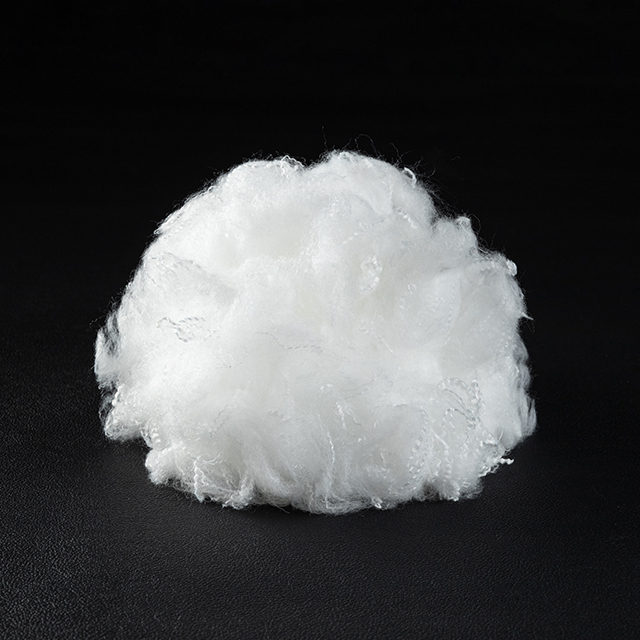
Applying a silicone microemulsion finish fundamentally alters the mechanical properties of synthetic fill. This chemical treatment heavily reduces fiber-to-fiber friction. It enables Micro Down Like Fiber to achieve and maintain high compression recovery. You get the thermal efficiency and longevity of natural down. The material also bypasses the common limitations of untreated synthetics.
Silicone finishes lower the coefficient of friction between synthetic fibers, preventing the mechanical entanglement and clumping that destroy loft over time.
The hydrophobic nature of siliconized treatments repels moisture, mitigating the dampness that causes both natural down and untreated synthetics to collapse.
Premium siliconized faux down fiber improves the weight-to-warmth ratio of synthetic fills, requiring less overall weight to achieve high thermal resistance.
Specifying high-quality synthetic fill requires evaluating wash-off rates, as inferior silicone coatings degrade after repeated laundering.
Balancing fiber slickness with shell fabric density is necessary to prevent fiber migration while maintaining hypoallergenic benefits.
Loft refers to the volumetric measurement of trapped air within an insulating material. This trapped air acts as the primary thermal insulator in garments and bedding. Still air conducts heat very poorly. Therefore, a higher volume of trapped air results in greater thermal resistance. Insulators do not generate heat. They simply prevent body heat from escaping into the colder surrounding environment. We measure this thermal resistance using the Clo value standard.
Natural down utilizes a three-dimensional cluster structure to trap this air. A down plumule looks like a dandelion head. It features thousands of tiny filaments radiating from a central point. This structure naturally pushes against neighboring clusters. It creates massive pockets of air. Standard synthetics rely on crimped linear fibers. These are essentially two-dimensional wavy strands. Under pressure, these linear strands align parallel to one another. They flatten out and lose their air-trapping capacity.
This structural difference creates a significant weight-to-warmth dilemma. Untreated microfiber is denser and less insulating than natural down. Manufacturers traditionally require heavier fill weights to achieve the same warmth. A jacket filled with untreated polyester feels noticeably heavier than a down jacket of the same temperature rating. This excess weight reduces user comfort and limits mobility on the job site or in the backcountry.
The core issue is the friction problem. Untreated synthetic fibers grip one another under compression. When you sit on a synthetic cushion or pack a sleeping bag, the fibers press together. Microscopic surface irregularities cause them to lock in place. They permanently mat together. They fail to spring back to their original volume. This loss of loft destroys the thermal resistance of the product. Testing this in a factory setting involves standard cylinder compression tests, where weights are applied to a specific volume of fiber to measure its recovery percentage over time.
To solve the friction problem, manufacturers apply nonionic silicone softeners during the finishing stage of fiber production. These chemical microemulsions coat individual polyester filaments at a microscopic level. The emulsion particles are tiny enough to penetrate the fiber bundle completely. They alter the mechanical properties of the surface. The fiber web then passes through curing ovens set between 130°C and 170°C. The heat bakes the silicone, causing it to cross-link and form a permanent, microscopic film over the polyester backbone.
This coating process transforms rigid polyester into a highly pliable, slick material. The treated fibers no longer catch on one another. Instead, they mimic the independent movement of natural down plumules. They slide freely within the fabric shell. This independent movement is necessary for mimicking the luxurious feel of natural down. It prevents the stiff, board-like feel common in cheap synthetic garments.
Surface slickness directly enhances compression recovery. We often call this bounce-back on the manufacturing floor. When you compress the fill, the fibers slide past one another. They do not lock together. Once the pressure is removed, the inherent crimp of the polyester acts like a spring. The slick surface allows the fibers to instantly re-expand. They push apart and trap air once again. This mechanism preserves the loft over thousands of compression cycles.
Premium silicone treatments allow synthetic fibers to target specific fill power equivalencies. Engineers manipulate the denier and the silicone coating thickness. A 0.9D (denier) fiber requires a different silicone concentration than a 1.2D fiber to achieve optimal slickness without becoming overly heavy. A well-engineered synthetic fill can achieve a 600 to 650 fill power equivalency. It does this without adding excessive weight. This makes it a highly viable alternative for premium outerwear and bedding.
Moisture is the enemy of loft. Humidity, sweat, and incomplete drying after washing cause fibers to stick together. Water creates surface tension between the filaments. This tension pulls the fibers into tight clumps. They lose their insulating capacity entirely. Industry data shows that even a small amount of retained moisture drastically reduces the Clo value of a garment. This is a major liability for outdoor gear designed for wet environments.
Silicone provides distinct hydrophobic advantages. The cross-linked silicone layer acts as a moisture barrier. It prevents the synthetic fiber from absorbing water into its microscopic surface pores. Water droplets simply bead up and roll off the treated filaments. This prevents the fill from collapsing in damp conditions. Unlike natural down, which loses all insulating power when wet, siliconized synthetics retain their loft and warmth even when exposed to heavy perspiration or rain.
These materials also offer significant hypoallergenic and sanitary benefits. Natural down can harbor allergens, dust mites, and dander. If natural down is not perfectly dried, it degrades and grows mold. Siliconized synthetic fills offer a clean, hypoallergenic alternative. They resist the moisture buildup responsible for mold and odors. The synthetic polymer does not provide a food source for dust mites. This makes them ideal for hospital bedding, hotel duvets, and sensitive consumers.
Washability and longevity improve dramatically with proper silicone treatments. Untreated fibers suffer severe mechanical degradation over a standard 50-wash lifecycle. The friction during washing shreds the filaments. High-quality silicone finishes resist detergent stripping. They maintain the slickness of the fiber. The product retains its loft and insulating powers for years, even after repeated commercial laundering according to ISO 6330 standards.
Not all synthetic fills are created equal. You must understand the performance trade-offs in different base materials. Specifying recycled micro down fiber is increasingly popular for sustainability initiatives. However, it presents unique structural differences compared to virgin polyester. Recycled polymers, derived from post-consumer PET bottles, can have slight irregularities in their chemical chain. These irregularities can affect the inherent springiness and tensile strength of the fiber.
Silicone finishes bridge the performance gap between sustainable and virgin materials. Manufacturers apply heavy silicone microemulsions to recycled fibers. This compensates for any potential stiffness in the base polymer. The silicone restores the necessary slickness and flexibility. When processed correctly through advanced extrusion and curing, recycled fibers perform identically to virgin synthetics in thermal resistance tests.
You will also encounter various industrial grades during procurement. Color variations in raw fill are common and often intentional. Using yellow down like fiber indicates specific chemical treatments or base material origins. It may contain flame retardant additives or UV stabilizers baked into the polymer. It might also reflect the specific origin of the recycled base polymer, where stripping the color entirely would degrade the fiber's structural integrity.
Yellow grades are typically used in applications where pure white fill is unnecessary. If the shell fabric is dark, heavy, or opaque, the color of the fill does not matter. These specialized grades often provide enhanced durability for technical outerwear, sleeping bags, or upholstery. You must match the grade of the fiber to the specific requirements of your end product to optimize manufacturing costs.
Fiber Grade | Base Material | Primary Application | Silicone Impact |
|---|---|---|---|
Virgin Siliconized Fiber | New Extruded Polyester | Premium Bedding, Luxury Outerwear | Maximum loft, highest bounce-back, pure white color. |
Recycled Siliconized Fiber | Post-Consumer PET Bottles | Eco-Friendly Apparel, Standard Duvets | Restores flexibility, mimics virgin performance closely. |
Yellow Down Like Fiber | Treated/Industrial Polyester | Upholstery, Technical Gear, Dark Shells | Seals in flame retardants, maintains slickness under heavy use. |
Handling highly slick fibers on the factory floor requires specific equipment adjustments. You cannot run heavily siliconized microfibers through standard carding and blowing machines without modifying the settings. The extreme slickness reduces the natural cohesion of the fiber web. If the carding machine wire specifications are incorrect, the fibers will slip, causing uneven web formation and inconsistent fill weights.
Static electricity is a major operational hurdle. As the slick polyester fibers move rapidly through blowing pipes and nozzles, they generate significant static charges. This causes the fibers to cling to the inside of the machinery or repel each other erratically during the filling process. Factories must install active static eliminators and maintain strict humidity controls (typically around 65% relative humidity) in the filling room to keep the production line moving smoothly.
Blowing machine nozzles require careful calibration. Microfibers are incredibly fine, often under 1 denier. When combined with a silicone finish, they flow almost like a liquid. Standard large-diameter nozzles will result in overfilling and poor distribution. Operators must use smaller, precision nozzles and adjust the air pressure to ensure the fiber lofts fully as it enters the fabric shell, rather than packing into dense, heavy clumps.
Construction methods dictate the final performance of the insulation. Proper baffle-box stitching is necessary for bedding and high-end jackets. Baffle boxes create three-dimensional fabric chambers using internal fabric walls. They keep the slick fibers evenly distributed. Sewn-through construction simply pinches the top and bottom fabrics together, creating cold spots at the seams. Baffle boxes allow the siliconized fill to loft fully while preventing it from shifting to the edges of the product over time.
Manufacturing Issue | Root Cause | Factory Floor Solution |
|---|---|---|
Uneven Web Formation | Low fiber cohesion due to high silicone slickness. | Adjust carding machine wire angles and reduce cylinder speeds. |
Nozzle Clogging / Clinging | Static electricity buildup in blowing pipes. | Install static eliminators and increase room humidity to 65%. |
Fiber Leakage at Seams | Needle holes too large for fine denier slick fiber. | Use ballpoint needles and high-density thread for stitching. |
Cold Spots in Garment | Sewn-through construction pinching the loft. | Switch to baffle-box construction to allow full 3D expansion. |
The most significant procurement risk is silicone wash-off. Cheap, temporary silicone coatings wash out after just a few laundry cycles. Once the silicone is gone, the fibers revert to their high-friction state. The product experiences sudden and permanent clumping. You must establish criteria for permanent or cross-linked silicone finishes. These finishes bond chemically to the polyester backbone during the curing process and resist harsh detergent stripping.
Fiber migration is another major concern. Highly siliconized fill is extremely slick. Its primary drawback is its tendency to slip through standard woven fabrics. The microfibers can poke through the shell. This creates an unsightly, prickly surface on the garment or duvet. Shell compatibility is non-negotiable when working with these advanced fills. You cannot use standard loosely woven cotton or cheap nylon.
You must implement strict mitigation strategies for the fabric shell. Require down-proof calendared fabrics. Calendaring uses heavy heated rollers to press the fabric, flattening the yarns and sealing the pores. Specify tighter weave constructions. Look for high thread counts (minimum 233 TC, preferably 300 TC) and low micron pore sizes. The ideal pairing is siliconized fill with breathable, high-density calendared cotton shells. This maintains hypoallergenic benefits while preventing fiber leakage.
Implement standardized testing protocols before bulk procurement. Do not rely on visual inspections or hand-feel alone. Test for fill power equivalence using standard cylinder compression tests. Measure the thermal resistance to determine the exact Clo value. Conduct wash-durability tests based on AATCC standards. Wash the sample 20 to 50 times and measure the loft retention. This ensures the silicone finish is truly permanent and the fabric shell holds up.
Request technical data sheets verifying cross-linked silicone application temperatures.
Specify down-proof calendared fabrics with a minimum 233 thread count.
Mandate baffle-box construction for all high-loft bedding products.
Perform 20-cycle wash tests to verify silicone retention and loft recovery.
Test fabric pore size against the specific denier of the chosen microfiber.
Compare the Clo value of the synthetic sample against a natural down baseline.
Audit factory humidity controls to ensure proper handling of static-prone fibers.
Silicone finishes are not merely a luxury additive. They are a structural necessity for any synthetic fill intended to replicate natural down. Without a durable silicone microemulsion, polyester fibers will inevitably mat, clump, and fail under compression. The finish provides the essential slickness required for long-term compression recovery. It improves the weight-to-warmth ratio and ensures the loft survives repeated commercial laundering.
Buyers should prioritize suppliers who provide transparent technical data. Look for clear metrics on silicone cross-linking durability, curing temperatures, and specific fiber denier. Avoid generic marketing claims about plushness. Focus on wash-test results and thermal resistance data. The longevity of your final product depends entirely on the chemical bond between the silicone and the polyester filament, paired with the correct down-proof fabric shell.
Audit supplier technical data sheets to confirm the use of high-temperature cross-linked silicone finishes rather than temporary topical sprays.
Order sample batches to conduct independent cylinder compression tests and 20-cycle wash durability testing.
Verify shell fabric compatibility by running rigorous fiber migration tests on calendared fabrics before finalizing product designs.
Update your manufacturing tech packs to mandate baffle-box construction and specify static control measures for the filling room.
A: It is typically engineered from ultra-fine polyester microfibers. These fibers are often less than 1 denier in thickness. They are crimped and treated with a specialized silicone finish. This treatment mimics the texture, weight, and insulating properties of natural goose or duck down.
A: Untreated microfiber is denser and requires more fill for equivalent warmth. However, a high-quality silicone finish maximizes the loft of the fiber. This significantly improves its weight-to-warmth ratio. It allows the synthetic fill to closely mimic the lightweight feel of 600+ fill power natural down.
A: The silicone coating drastically reduces surface friction between the individual fibers. Instead of tangling and matting together under weight or moisture, the fibers slide past one another. They easily re-expand after compression, maintaining an even distribution of fill throughout the comforter.
A: Yes. Natural down can trigger allergies and trap dust mites. Siliconized faux down fiber is inherently hypoallergenic. The synthetic material does not provide a food source for mites. The silicone coating also resists moisture accumulation, further preventing mold and mildew growth.
A: High-quality recycled micro down fiber can match the thermal performance of virgin fiber. It must undergo a rigorous extrusion process. It also requires a premium, durable silicone finish. This ensures the recycled polymer achieves the necessary slickness and loft recovery.
A: Loft loss after washing is usually caused by incomplete drying or the degradation of a low-quality silicone finish. If moisture remains, it binds the fibers. If the silicone washes away, the raw polyester fibers experience high friction, leading to permanent clumping.