Views: 0 Author: Site Editor Publish Time: 2026-08-18 Origin: Site
The textile manufacturing sector faces intense pressure to balance high-performance fabric specifications with strict environmental compliance. Procurement and product development teams must select a coloration method that matches their exact application requirements. Choosing the wrong dyeing process leads to excessive water usage, poor UV resistance, batch-to-batch color inconsistencies, and restrictive inventory bottlenecks. This guide provides a direct technical comparison between dope dyeing (solution dyeing or spun dyeing) and conventional piece dyeing. We establish a framework to evaluate which method delivers the best return on investment based on production volume, performance criteria, and supply chain flexibility. You will learn how to align your material sourcing with both operational capabilities and sustainability targets.
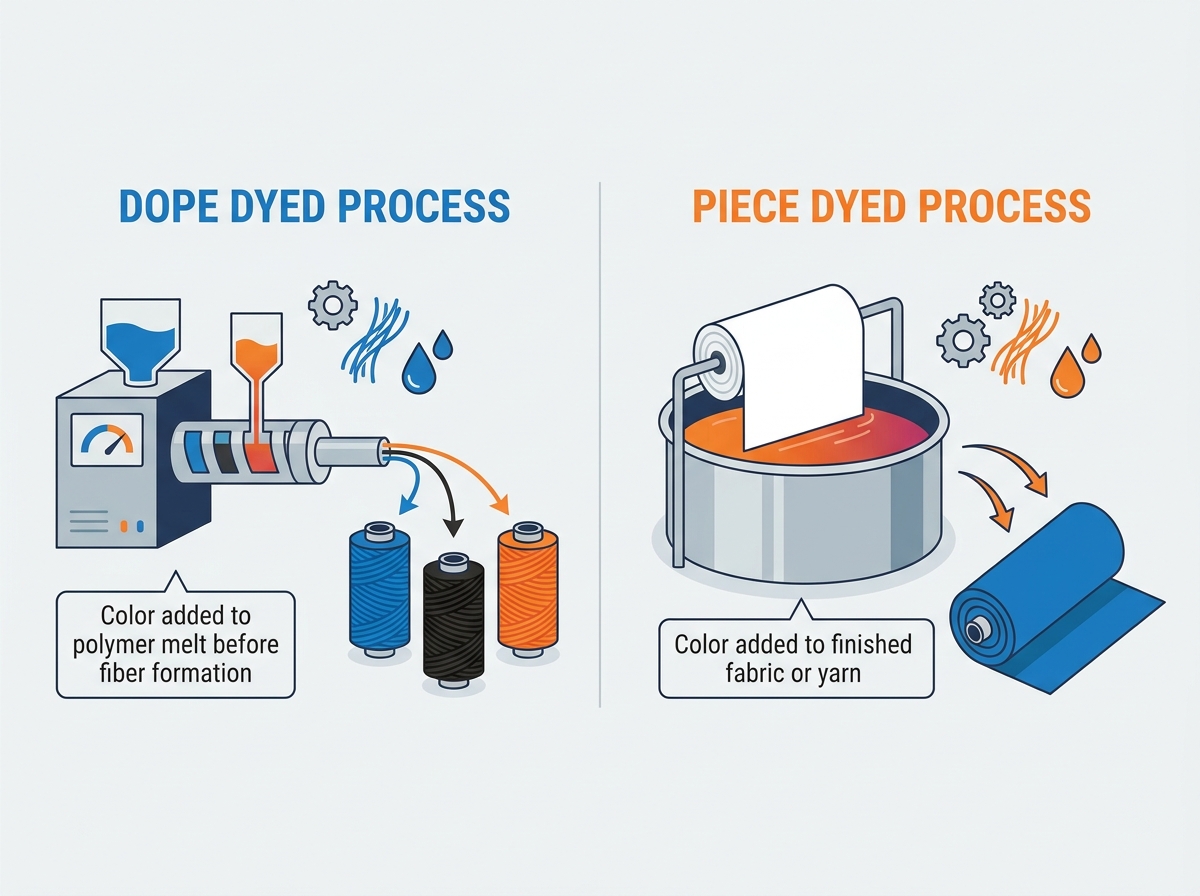
Coloration Stage: Dope dyeing integrates color pigment at the polymer melt stage before fiber extrusion, whereas piece dyeing applies color to the finished woven or knitted fabric.
Performance Superiority: Dope dyed fibers inherently possess higher color fastness, UV resistance, and wash fastness because the pigment is locked inside the fiber's core structure.
Environmental Impact: Dope dyeing drastically reduces water consumption, energy use, and chemical effluent compared to traditional piece dyeing baths, and pairs exceptionally well with recycled polyester (rPET) initiatives.
Supply Chain Trade-Offs: Piece dyeing offers greater flexibility for late-stage color decisions and smaller Minimum Order Quantities (MOQs), while dope dyeing requires higher upfront volume commitments but yields lower unit costs at scale.
Defining the fundamental differences in how and when color enters the textile manufacturing lifecycle dictates the physical properties of the final fabric. The stage of pigment introduction alters the molecular structure and performance limits of the material.
The dope dyeing process introduces color at the very beginning of fiber creation. Manufacturers dry and melt polymer chips inside a high-temperature extruder, typically operating between 280°C and 295°C. Before the molten polymer reaches the spinneret, precise gravimetric dosing equipment injects a color masterbatch into the melt. This masterbatch contains highly concentrated pigment particles suspended in a carrier resin.
The extruder screw thoroughly mixes the pigment with the liquid polymer, ensuring a homogeneous blend. The colored melt then pushes through the microscopic holes of the spinneret to form continuous filaments. Operators cool, draw, crimp, and cut these filaments into staple lengths. Because the pigment enters the polymer before it solidifies, the color becomes a permanent, integral part of the fiber matrix. The resulting Dope Dyed Polyester Staple Fiber is colored entirely through to its absolute core, rather than just on the surface. This structural integration prevents the color from washing out or rubbing off during subsequent manufacturing steps or end-user application.
Piece dyeing takes a completely different approach, applying color much later in the production chain. Manufacturers first spin undyed greige yarn and weave or knit it into fabric. This raw fabric then moves to a dyehouse. Workers load the fabric into high-temperature, pressurized jet dyeing machines filled with water, disperse dyes, and chemical auxiliaries like leveling agents and carriers.
The process requires temperatures exceeding 130°C to swell the polyester fibers. This swelling opens the amorphous regions of the polymer, allowing the dye molecules to force their way into the structure. After the dyeing cycle, the fabric undergoes reduction clearing—a chemical wash using sodium hydrosulfite and caustic soda—to strip away unfixed surface dyes. The fabric is then rinsed multiple times and dried via stenter frames. This method relies heavily on chemical affinity and physical forcing. It often results in surface-level coloration where the dye fails to penetrate the innermost core of the fiber, leaving the center completely undyed.
Comparing the physical and aesthetic outcomes of both methods against standard textile testing metrics reveals distinct performance gaps. The method of coloration directly impacts how the fabric behaves under mechanical stress, sunlight exposure, and repeated industrial washing.
Dope dyed fibers consistently score higher on the Grey Scale for color change and staining. Standard tests like ISO 105-C06 for wash fastness and ISO 105-B02 for light fastness demonstrate this superiority. The pigment particles in dope dyed fibers are physically trapped within the polymer chains. Detergents, dry cleaning solvents, and mechanical abrasion cannot easily reach or dislodge them.
Piece dyed fabrics remain vulnerable to fading. UV rays degrade the surface-level dye molecules over time, breaking down the chemical bonds. Repeated industrial washing strips away the dye, causing the fabric to look washed out and aged prematurely. Dope dyeing provides a massive advantage for applications requiring prolonged sun exposure. Automotive interiors, outdoor awnings, and marine textiles rely heavily on solution-dyed materials to meet strict OEM weathering standards like SAE J1885.
Achieving deep, saturated colors via piece dyeing presents significant technical challenges on the dyehouse floor. Dark shades require massive concentrations of disperse dyes. The polyester fiber can only absorb a limited amount of dye, leaving excess unfixed dye on the fabric surface. This leads to poor rubbing fastness and dye migration, where dark colors bleed onto lighter adjacent fabrics during washing or storage.
Polymer-level coloration solves this problem entirely. Products like black dope dyed polyester fiber and blue dope dyed polyester fiber serve as industry standards for achieving uniform, high-density coloration without any risk of bleeding. The pigment is locked inside, ensuring dark and vibrant colors remain stable regardless of the surrounding environment. Dope dyeing is equally ideal for high-visibility bright colors and neons. It ensures safety apparel and high-vis gear remain durable and resistant to fading over time, maintaining compliance with visibility regulations.
Piece dyeing inherently suffers from batch-to-batch shade variations. Differences in water hardness, dye lot strength, temperature fluctuations, and liquor ratios all affect the final color. Matching a specific Pantone shade across multiple dye runs requires constant adjustment by the dye master and often results in rejected batches or off-shade classifications.
Dope dyeing relies on precise, replicable color matching. The masterbatch polymer extrusion process uses automated gravimetric dosing. If the masterbatch formulation remains constant and the dosing percentage is locked, the resulting fiber color remains identical. Whether you produce one ton today or one hundred tons next year, the Delta E variation is virtually zero. This consistency is essential for large-scale uniform programs and automotive textiles where color matching across different interior components is strictly enforced.
Microscopic cross-section analysis reveals a major vulnerability in piece dyeing known as "ring dyeing." In this scenario, the dye only penetrates the outer ring of the fiber, leaving the core completely undyed. When the fabric surface wears down through daily abrasion, the undyed core becomes visible. This phenomenon makes the fabric look old, frosted, and faded long before its structural integrity fails.
Polymer-level coloration eliminates ring dyeing entirely. The deep, solid penetration results in superior shine and a more uniform luster across the fabric surface. Furthermore, skipping the harsh post-processing chemicals and high-tension jet dyeing machines preserves the physical integrity of the fiber. This often results in a softer hand feel compared to piece dyed fabrics that have undergone extensive chemical treatments, reduction clearing, and high-heat stentering.
Assessing the ecological footprint and regulatory compliance of both methods highlights a stark contrast in resource consumption. The textile industry is moving rapidly toward sustainable practices, making coloration methods a primary focus for environmental audits and brand compliance.
Conventional piece dyeing is one of the most water-intensive processes in modern manufacturing. Dyeing one kilogram of polyester fabric can consume between 50 and 150 liters of water, depending on the machinery and shade depth. This water must be heated to 130°C, requiring massive amounts of steam energy generated by burning natural gas or coal. The subsequent rinsing and drying phases consume even more energy, driving up the overall carbon footprint.
Dope dyeing operates as a virtually waterless coloration process. The color is added during the melting phase, which requires heat but zero water. The energy used to melt the polymer is a necessary step for fiber extrusion regardless of whether color is added. By skipping the dyehouse entirely, dope dyeing drastically reduces the overall carbon emissions and water footprint of the final fabric.
Dyehouses generate massive volumes of toxic wastewater. This effluent contains unfixed disperse dyes, leveling agents, carriers, and heavy metals. Treating this wastewater to reduce Biological Oxygen Demand (BOD) and Chemical Oxygen Demand (COD) to meet local environmental standards is complex and resource-heavy. Improper discharge leads to severe ecological damage in surrounding waterways.
Utilizing dope dyed fibers eliminates this chemical effluent at the source. There are no dye baths to drain and no reduction clearing chemicals to neutralize. Adopting dope dyed materials directly assists brands in meeting ZDHC (Zero Discharge of Hazardous Chemicals) guidelines and achieving corporate ESG targets without relying on complex wastewater treatment plants.
The industry is increasingly combining mechanical recycling with waterless coloration to maximize environmental benefits. Manufacturers wash and shred post-consumer plastic bottles into clean PET flakes. They melt these flakes and add color pigments directly into the recycled polymer melt before extrusion.
Combining rPET with the dope dyeing process creates an exceptionally sustainable textile. It simultaneously diverts plastic waste from landfills and skips the most polluting stage of textile manufacturing. This dual-benefit approach is becoming the standard for eco-conscious outdoor brands, automotive manufacturers, and sustainable fashion lines looking to verify their green claims.
Commercial realities dictate sourcing decisions just as much as technical specifications. Procurement teams must weigh inventory risks, lead times, and production volumes when selecting a coloration method for their supply chain.
Custom masterbatch creation in dope dyeing requires a high MOQ threshold. Spinning mills must run large volumes to justify the time and material lost when purging and cleaning the extruder between different colors. Ordering a custom dope dyed color often requires commitments of several tons per shade.
Piece dyeing offers much lower MOQs. Brands can hold large inventories of undyed greige fabric and piece-dye smaller batches on demand. This allows them to dye only a few hundred kilograms of a specific color, reducing the risk of holding unsold colored inventory if market preferences shift unexpectedly.
Piece dyeing supports trend-driven markets. Brands can wait until the last possible moment to decide on seasonal colors based on current market trends. They simply send their stocked greige fabric to the dyehouse and receive finished goods in a matter of weeks.
Custom dope dyed fiber production requires longer lead times. Formulating the masterbatch, scheduling the extrusion run, spinning the yarn, and weaving the fabric takes significantly longer. Dope dyeing is less responsive to sudden shifts in fashion color trends, requiring more accurate long-term forecasting.
The initial per-kilogram cost of dope dyed yarn is generally higher than undyed greige yarn. The masterbatch pigments and the specialized extrusion process add upfront capital requirements. However, this comparison is incomplete without factoring in downstream processing.
Piece dyeing incurs cumulative downstream operational expenses. You must pay dyehouse processing fees, water surcharges, energy costs, and chemical treatments. Furthermore, piece dyeing often causes fabric shrinkage and yield loss. When producing at scale, the elimination of the dyeing phase makes dope dyed fabric highly competitive, often resulting in a lower final unit cost for high-volume programs.
Mapping technical and commercial evaluation points to specific industry use cases helps procurement teams make informed decisions. Neither method is universally superior; their value depends entirely on the end-use application.
Comparison Matrix: Production and Performance Metrics
Feature / Metric | Dope Dyeing | Piece Dyeing |
|---|---|---|
Color Fastness (UV & Wash) | Excellent (Pigment inside core) | Moderate to Good (Surface dye) |
Water Consumption | Near Zero | Very High (50-150L per kg) |
Minimum Order Quantity (MOQ) | High (Often measured in tons) | Low (Can dye small fabric rolls) |
Color Consistency | Perfect batch-to-batch matching | Prone to dye lot variations |
Market Responsiveness | Slow (Requires long lead times) | Fast (Late-stage color decisions) |
Dope dyeing excels in environments where durability, core color penetration, and color fastness are non-negotiable. It is the preferred choice for high-volume basics and evergreen products. Specific applications include:
Automotive interior textiles (seats, headliners, carpets) requiring extreme UV resistance.
Outdoor and marine gear (awnings, tents, boat covers) exposed to harsh weather.
Corporate uniforms and workwear subjected to heavy industrial washing.
Home furnishings and upholstery requiring high rub fastness.
Military and tactical gear demanding strict infrared and color consistency standards.
Piece dyeing remains necessary for markets that prioritize flexibility and rapid turnaround times over extreme durability. It is the standard choice for:
Trend-driven apparel and seasonal fashion collections.
Highly customized low-volume orders for promotional wear.
Boutique brands testing new colorways without committing to large inventory volumes.
Adopting dope dyed fibers introduces specific practical challenges on the production floor. Understanding these risks allows procurement teams to implement effective mitigation strategies before committing to large orders.
The primary risk of dope dyeing is the inability to quickly pivot colors if market trends shift. Holding tons of a specific colored yarn that goes out of style creates massive inventory write-offs.
To mitigate this risk, utilize dope dyeing for core, evergreen colors that sell consistently year after year. Black, navy, grey, and white are perfect candidates. Reserve piece dyeing for seasonal accent colors or highly specific custom shades. This hybrid approach balances sustainability and operational efficiency with market flexibility.
Poor pigment dispersion during the extrusion process is a critical risk. If the masterbatch does not mix evenly with the polymer melt, pigment particles can agglomerate. This causes blockages in the spinneret, leading to weak spots in the fiber, dropped tenacity, and uneven coloration.
Mitigate this by auditing suppliers for advanced melt-spinning technology. Request technical data sheets (TDS) verifying fiber strength, elongation, and pigment uniformity. Conduct microscopic cross-section evaluations on sample fibers to ensure the pigment is evenly distributed throughout the core before approving bulk production.
Audit current fabric failure logs to identify recurring issues with fading, bleeding, or batch-to-batch color inconsistency.
Calculate the full downstream operational expenses of your current piece dyeing operations, factoring in water surcharges, energy usage, and chemical waste treatment.
Identify high-volume, evergreen colors in your product lines that are prime candidates for transition to dope dyed alternatives.
Request dope dyed fiber samples and masterbatch technical data sheets from certified suppliers to conduct baseline tenacity and color fastness testing.
A: It is a fiber colored by adding pigment directly to the polymer melt before extrusion. The color integrates into the fiber's core rather than just coating the surface. It is also known as solution-dyed or spun-dyed fiber.
A: While upfront volume commitments and masterbatch formulations require capital, dope dyeing improves overall operational efficiency at scale. It eliminates downstream dyehouse processing and saves massively on water, energy, and chemical usage.
A: Black is a high-volume, evergreen color that requires massive amounts of dye and water in traditional piece dyeing. Dope dyeing black is the most economically and environmentally logical way to achieve deep, non-bleeding coloration.
A: Yes, most colors can be formulated via masterbatch. However, the high MOQs make it impractical for highly specific, low-volume custom shades compared to the flexibility of piece dyeing.
A: High-quality masterbatch dispersion maintains fiber tenacity. While poor dispersion can weaken the fiber, proper dope dyeing avoids the physical degradation often caused by harsh piece-dyeing chemicals and high-temperature jet machines.
A: Dope dyeing utilizes near-zero water and produces no chemical effluent. Piece dyeing requires heavy water consumption, massive steam energy, and generates toxic wastewater containing unfixed dyes and chemicals.
A: It is created by adding color pigments directly into melted post-consumer recycled plastic flakes before extrusion. This process combines the sustainability of recycling plastic waste with a zero-water dyeing process.