Views: 0 Author: Site Editor Publish Time: 2026-08-22 Origin: Site
The global textile and manufacturing sectors face escalating pressure to transition toward circular supply chains. Raw material selection is a strategic priority for facility managers and production engineers. Procurement and product development teams must balance corporate sustainability mandates with strict requirements for material performance and batch consistency. You need reliable data to navigate these choices effectively on the factory floor. This guide provides a technical and commercial evaluation of virgin versus regenerated polyester staple fiber. We detail physical properties, chemical treatments, safety profiles, and implementation realities to support evidence-based procurement decisions. Understanding the molecular differences between these polymers prevents costly downtime and ensures your end products meet exact specifications.
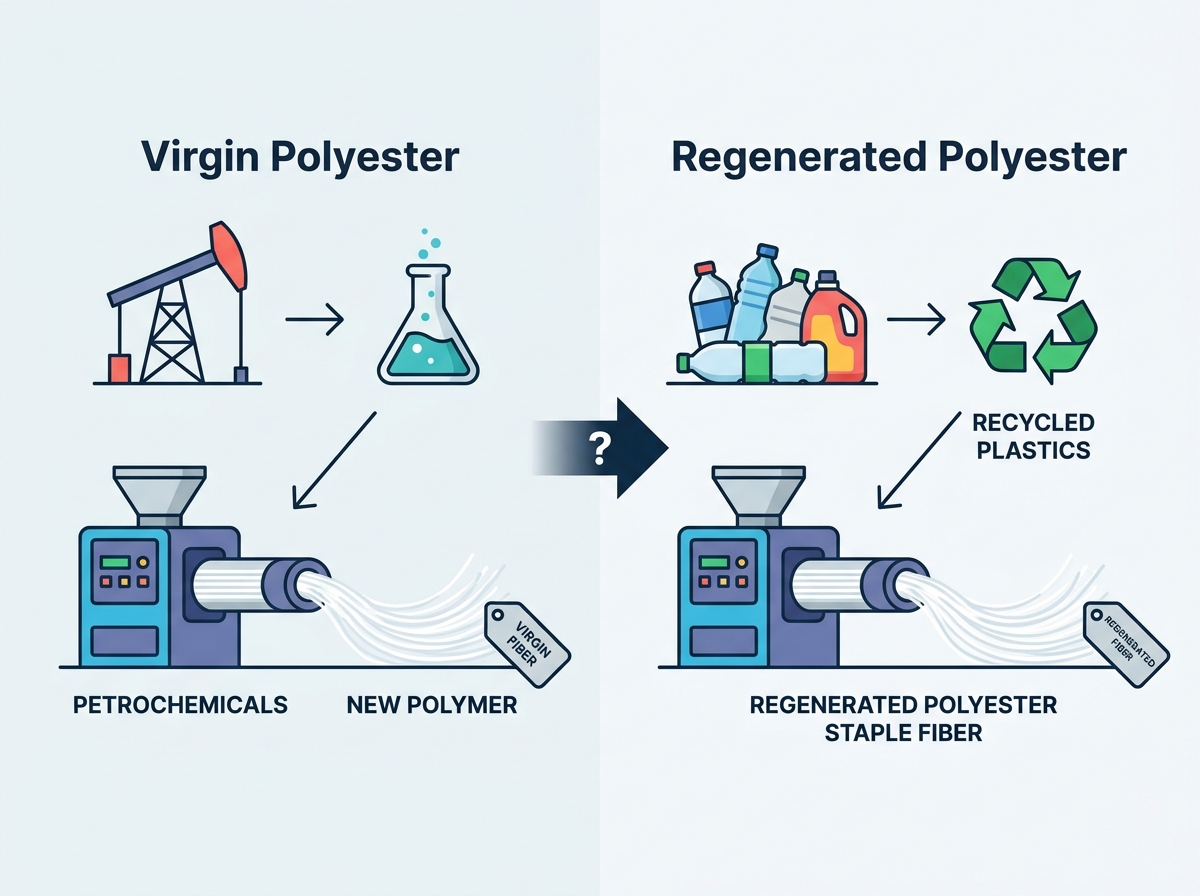
Source and Processing: Virgin polyester relies on fresh petrochemical extraction and polymerization, whereas regenerated polyester is synthesized from existing materials, primarily post-consumer PET bottles or textile offcuts.
Performance Trade-offs: While regenerated fibers offer comparable thermal properties and improved air permeability for enhanced comfort, repeated recycling cycles can degrade molecular chains, marginally reducing abrasion resistance, elasticity, and overall service life compared to virgin counterparts.
Chemical Customization & Safety: Both fibers are fundamentally safe for consumer use, but manufacturers can specify variants like brightened recycled polyester fiber for aesthetic requirements or non-fluorescent recycled polyester fiber to meet stringent health and safety compliance standards.
Total Cost of Ownership: The initial cost parity between virgin and regenerated fibers fluctuates based on crude oil prices versus recycling infrastructure costs, but regenerated options often yield higher downstream value through ESG compliance and premium sustainable market positioning.
Establishing baseline manufacturing processes reveals how raw material origins dictate downstream physical properties. These origins influence visual characteristics and supply chain vulnerabilities. You must understand the fundamental synthesis of each fiber type to anticipate how they behave on the production line. The chemical history of the polymer directly impacts extruder settings, spin finish applications, and carding machine parameters.
Virgin polyester staple fiber originates directly from petrochemical derivatives. Manufacturers synthesize purified terephthalic acid (PTA) and monoethylene glycol (MEG) under high heat and pressure. Operators mix these chemicals into a slurry and feed them into an esterification reactor operating at 250°C to 260°C. This reaction distills off water and creates a prepolymer. The prepolymer then moves into a polycondensation reactor. Under deep vacuum conditions, the system extracts excess ethylene glycol, driving up the melt viscosity until the polymer reaches the target molecular weight.
Gear pumps force this highly viscous melt through microscopic holes in a spinneret. Quench air immediately cools the extruded filaments into solid strands. Rollers apply a specialized spin finish to reduce static electricity and improve downstream processing. The continuous tow is collected, drawn in a hot water bath to align the molecular chains, crimped in a stuffer box to add texture, heat-set in an oven, and finally cut into staple lengths.
This traditional process offers distinct baseline advantages. It guarantees absolute molecular integrity. The polymer chains remain long and unbroken, yielding an intrinsic viscosity (IV) typically around 0.64 to 0.68 dL/g. You face zero contamination risk from foreign polymers or organic matter. The resulting fiber presents a pure white baseline aesthetic. It delivers exceptionally high consistency in dye uptake across massive production volumes, minimizing shade variations between different dye lots.
Regenerated fibers bypass fresh petrochemical extraction. Facilities convert existing post-consumer PET bottles and industrial waste into usable fiber through mechanical recycling. The chemical history of the feedstock requires a completely different preparation phase before extrusion. Plant operators must manage contamination at a microscopic level to prevent spinneret blockages and fiber breakage.
The mechanical recycling process follows a strict sequence of operations:
Bale breaking and trommel screening remove loose dirt, rocks, and debris from incoming compressed bottle bales.
Near-infrared (NIR) optical sorters scan the stream to eject PVC, polycarbonate, and non-PET plastics that would ruin the polymer melt.
Heavy-duty granulators chop the sorted bottles into 12mm to 15mm flakes.
Friction washers agitate the flakes in an 85°C water bath containing a 2% caustic soda (NaOH) solution to strip away paper labels and adhesive residues.
Sink-float separation tanks utilize specific gravity to separate the heavy PET flakes (which sink) from the lighter polypropylene and polyethylene bottle caps (which float).
Centrifugal dryers and thermal systems reduce the flake moisture content to below 50 parts per million (ppm) to prevent severe hydrolysis during melting.
High-resolution optical cameras perform a final color sort to remove opaque or heavily dyed flakes before the material enters the extruder.
Feedstock variability introduces unique challenges. Post-consumer bottles vary in origin, age, and previous chemical exposure. Unprocessed recycled fibers frequently exhibit a natural off-white or grayish tint. Top-tier suppliers mitigate contamination through advanced melt filtration. They install continuous screen changers with 20-micron mesh filters on the extrusion line to remove microscopic aluminum particles and sand before the polymer reaches the spinneret.
Mapping fiber features to end-product outcomes ensures successful material specification. You must evaluate durability, comfort, and lifecycle expectations against the physical realities of the chosen polymer. Testing protocols on the factory floor reveal distinct behavioral differences between virgin and recycled matrices.
Virgin fibers possess superior tenacity, typically measuring around 6.0 to 6.5 grams per denier (g/den). Their unbroken polymer chains align perfectly during the drawing process. This alignment creates high tensile strength. Regenerated alternatives exhibit slightly lower tenacity, often measuring between 5.0 and 5.5 g/den. The thermal stress of melting post-consumer plastics causes hydrolysis and thermal degradation. This degradation shortens the molecular chains.
Shorter molecular chains reduce intrinsic viscosity. The fiber matrix becomes slightly weaker under extreme tension. This molecular reality impacts high-stress applications. Industrial webbing, heavy-duty lifting straps, and structural geotextiles demand maximum chain integrity. Standard apparel and home textiles easily tolerate the minor strength reduction found in recycled variants. When processing recycled fibers, operators often adjust the draft ratio on the spinning frame to compensate for the lower tensile threshold, preventing excessive end-breaks during yarn formation.
Mechanically recycled fibers demonstrate a slight reduction in abrasion resistance. They exhibit relatively poor elasticity compared to virgin counterparts. The shortened polymer chains struggle to recover fully after repeated mechanical deformation. Cyclic loading breaks down the internal structure faster. During Martindale abrasion testing, fabrics woven entirely from mechanically recycled yarns may show pilling slightly earlier than virgin equivalents.
These limitations carry practical service life implications. For fiberfill applications, the difference remains entirely negligible. Pillows, cushions, and insulated jackets do not subject the fiber to severe friction. High-friction environments expose these weaknesses. Automotive interiors, commercial upholstery, and fast fashion garments subjected to frequent aggressive laundering require careful evaluation. Engineers often adjust the twist multiplier during yarn spinning to lock the recycled fibers more tightly into the yarn structure, improving the overall abrasion resistance of the final fabric.
Regenerated fibers often provide superior air permeability. The recycling process can introduce micro-variations in the fiber cross-section. These structural differences alter how yarns pack together during spinning. Looser yarn packing enhances airflow. This results in enhanced wearer comfort in everyday apparel. The slight irregularities in the fiber surface also reduce the synthetic, plastic-like hand feel often associated with virgin polyester, giving the fabric a more natural drape.
Fiberfill applications benefit heavily from these structural traits. Recycled fibers maintain excellent loft and thermal retention. Manufacturers engineer the crimp profile to trap dead air efficiently. Hollow conjugate siliconized (HCS) recycled fibers dominate the premium bedding and winter outerwear markets. The hollow core reduces the overall weight of the filling while maximizing thermal insulation. The recovery rate after compression remains highly competitive with virgin materials, provided the supplier applies a high-quality silicone finish during the final stages of production.
Sustainable fiber procurement must address specific visual, regulatory, and consumer safety requirements. You cannot compromise on health standards or brand aesthetics when adopting circular materials. Quality control teams rely on spectrophotometers and chemical assays to verify the integrity of incoming fiber bales.
General safety profiles show no fundamental difference between recycled and virgin polyester. Both materials remain chemically stable. They are entirely safe to wear and use in standard consumer goods. The extrusion process operates at temperatures exceeding 280°C. This extreme heat eradicates any organic pathogens or bacteria present on the post-consumer flakes. Rigorous caustic washing protocols remove residual consumer chemicals, sugars, and adhesives long before the plastic melts.
Recycled PET feedstock naturally produces a yellow or gray tint. This occurs due to mixed bottle colors, trace impurities, and the thermal degradation of the polymer. Quality control labs measure this using the CIELAB color space. Virgin polyester typically shows a b* (yellowness) value of around 1.0. Unprocessed recycled polyester often registers a b* value between 4.0 and 6.0. Suppliers counteract this by introducing optical brighteners during the extrusion process. These additives absorb invisible ultraviolet light and emit visible blue light. This optical illusion masks the yellowing effect completely.
Specifying brightened recycled polyester fiber solves strict aesthetic challenges. High-white textiles demand absolute color purity. Premium bedding, hotel linens, and vibrant apparel require visual parity with virgin polyester. Optical brighteners ensure the recycled material meets these non-negotiable visual standards. When inspecting these fibers under a UV lamp on the factory floor, they will fluoresce brilliantly, confirming the presence of the whitening agents.
Certain applications strictly prohibit optical brighteners. Manufacturers implement rigorous controls to produce fibers entirely free of fluorescent whitening agents (FWAs). This requires sourcing pristine, clear PET flakes. The sorting process must eliminate any plastics previously treated with brighteners. The extrusion lines undergo deep cleaning and purging to prevent cross-contamination from previous production runs. Operators test the output continuously using UV light boxes to ensure zero fluorescence.
Critical compliance applications rely on non-fluorescent recycled polyester fiber. Infant clothing, medical textiles, and intimate apparel demand absolute chemical inertness. These sectors prioritize hypoallergenic properties. Strict regulatory adherence exceeds standard safety baselines. Eliminating FWAs ensures compliance with stringent global health certifications, including OEKO-TEX Standard 100 Appendix 6, which sets the lowest possible limits for chemical residues in textiles intended for direct skin contact.
Macroeconomic and regulatory variables directly impact procurement strategies. You must evaluate supply chain dynamics and environmental metrics to justify material transitions. Relying on a single source for recycled polymers exposes production lines to unnecessary risks.
The supply chain dynamics for these two fibers diverge significantly. Virgin PSF availability remains directly tethered to global petrochemical output and refinery capacities. Regenerated PSF availability follows different logistical drivers. It depends on local recycling infrastructure, municipal collection rates, and the efficiency of flake processing facilities. Weather events, labor shortages in waste management, and changes in local recycling legislation can disrupt the flow of post-consumer bottles.
Supply chain scalability for high-volume manufacturing continues to improve. Major suppliers now secure massive, consistent streams of post-consumer waste through long-term contracts with municipal sorting facilities. They utilize massive blending silos that mix flakes from dozens of different sources. This homogenization process stabilizes the intrinsic viscosity and color baseline of the polymer melt, ensuring that massive textile mills receive consistent fiber bales month after month.
Transitioning to recycled materials drastically improves corporate ESG metrics. Regenerated polyester offers substantial carbon footprint reductions. It bypasses the energy-intensive petrochemical extraction and polymerization phases. The mechanical recycling process yields significant water savings compared to virgin synthesis, especially when facilities utilize closed-loop water filtration systems during the flake washing stage.
Verifying these environmental claims requires strict industry certifications. You must demand the Global Recycled Standard (GRS). GRS ensures chain of custody from the waste collector to the final fiber. It requires transaction certificates (TCs) for every shipment, proving the exact percentage of recycled content. OEKO-TEX Standard 100 verifies the absence of harmful substances. ISO 14001 confirms the supplier operates a robust environmental management system, tracking emissions, waste disposal, and energy consumption.
Switching to recycled materials introduces specific adoption risks. Transparently addressing these challenges allows you to engineer effective solutions on the production floor. Ignoring the chemical realities of recycled polymers leads to high defect rates and rejected fabric rolls.
Mixed feedstock creates inherent risks. You may encounter color variation and dye affinity discrepancies across different batches of regenerated fibers. Trace polymers in the PET flakes alter how the fiber absorbs disperse dyes. Surface oligomers—short polymer chains that migrate to the fiber surface during heat setting—can interfere with dye penetration. This leads to uneven coloration, banding, or speckling in large textile runs.
Mitigate this risk through aggressive supplier auditing and modified dye house procedures. Establish strict tolerance limits for intrinsic viscosity and color baseline before accepting a shipment. During production, utilize advanced dyeing auxiliaries. High-performance leveling agents help distribute dyes evenly across fibers with slight structural variations. Extending the hold time at the maximum dyeing temperature (typically 130°C) allows the disperse dyes to penetrate the recycled polymer matrix more uniformly.
High-abrasion environments expose the molecular limitations of recycled fibers. You risk premature material failure or a noticeable loss of elasticity over time. Upholstery fabrics may pill faster. Stretch garments may lose their recovery properties. Carding machines may generate excessive fly and waste if the recycled fibers lack the necessary tensile strength to survive the aggressive wire teeth of the main cylinder.
Strategic blending offers the most effective mitigation. Combine virgin and recycled fibers at the blow room stage to stabilize the molecular matrix. A blend of 30% virgin and 70% recycled polyester maintains high performance while hitting aggressive sustainability targets. The virgin fibers provide the necessary tensile backbone and elasticity. Adjusting the carding machine settings—specifically widening the gauge between the cylinder and the flats—reduces fiber breakage when processing high percentages of recycled material.
Selecting the correct material requires matching physical properties to end-product demands. Use this framework to guide your specification process and avoid over-engineering your textiles.
Material Specification Comparison
Application Criteria | Virgin Polyester | Regenerated Polyester |
|---|---|---|
Tensile Strength Requirement | Extreme Load / Industrial | Standard / Consumer |
Abrasion Resistance | Maximum Durability | Moderate Durability |
Dye Affinity Consistency | Absolute Precision | Requires Leveling Agents |
Carbon Footprint | High | Low (ESG Compliant) |
Air Permeability | Standard | Superior |
Certain applications tolerate zero molecular variance. Specify 100% virgin fiber for medical-grade implants, filtration media requiring exact micron ratings, and extreme-load industrial textiles. Heavy-duty lifting slings, safety harnesses, and structural geotextiles require maximum service life. The unbroken polymer chains guarantee predictable failure points under extreme stress. Virgin fiber ensures the intrinsic viscosity remains perfectly stable across every inch of the yarn.
Consumer apparel prioritizing comfort and air permeability benefits greatly from recycled materials. Specify Regenerated Polyester Staple Fiber for fiberfill in furniture, pillows, and winter jackets. Non-woven applications like acoustic panels, automotive trunk liners, and agricultural crop covers perform perfectly with recycled inputs. Brands with aggressive carbon-reduction mandates should default to this material for all standard consumer goods, adjusting their spinning and dyeing parameters to accommodate the polymer.
Transitioning product lines often requires a balanced approach. When durability and marketing claims must align perfectly, specify a blended fiber. Blending allows you to dial in the exact elasticity required for activewear while still claiming significant recycled content on the product label. Feed the virgin and recycled bales into separate hoppers in the blow room, using weigh-pan blending to ensure the exact ratio is maintained throughout the entire production run.
Regenerated polyester staple fiber stands as a commercially viable, high-performance material. Procurement teams succeed when they understand its molecular limitations, leverage its comfort advantages, and specify the correct chemical treatments. Base your final decision on the end-product's abrasion and elasticity requirements. Evaluate the necessity for optical brighteners versus non-fluorescent compliance based on your target market. Align the material choice with your brand's ESG commitments.
Request detailed technical data sheets (TDS) from prospective suppliers to verify intrinsic viscosity and tenacity metrics before running trials.
Initiate small-batch sample testing specifically focused on dye affinity, color fastness, and oligomer surface deposits.
Verify third-party GRS transaction certificates and OEKO-TEX compliance before committing to high-volume contracts.
Conduct cyclic abrasion testing if specifying recycled fibers for high-friction home textiles or automotive applications.
Adjust carding machine gauges and spinning draft ratios to accommodate the slightly lower tensile strength of recycled fibers.
A: While tensile strength remains highly comparable for general use, repeated recycling slightly degrades the polymer's molecular chains. This reduction lowers overall elasticity and abrasion resistance. Virgin polyester remains preferable only for extreme high-stress industrial applications where maximum structural integrity is non-negotiable.
A: Both materials are entirely safe for consumer wear and daily use. High extrusion temperatures eradicate pathogens. However, for strict medical or infant applications requiring zero chemical additives, you must specifically source non-fluorescent recycled polyester fiber to ensure complete hypoallergenic compliance.
A: Recycled PET feedstock often carries a natural off-white or gray tint due to mixed bottle colors and trace impurities. Manufacturers use brightened recycled polyester fiber, which incorporates optical brighteners during extrusion, to achieve pure white aesthetics identical to virgin fibers.
A: Cost parity fluctuates. Processing post-consumer waste involves labor-intensive collection, sorting, and washing. This often makes regenerated fibers equal to or slightly more expensive than virgin fibers, heavily depending on global crude oil prices and the efficiency of local recycling infrastructure.
A: Mechanical recycling typically limits the lifecycle to one or two iterations before significant quality loss occurs in elasticity and strength. Emerging chemical recycling technologies, which break the plastic down to its base monomers, show promise in extending this lifecycle infinitely.